
Sub-Acromial Impingement: Treatment for Shoulder Pain Relief
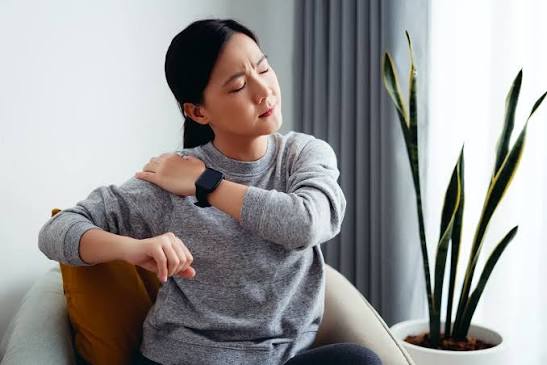
Are you struggling with shoulder pain when lifting your arm, reaching overhead, or sleeping on your side?
You may be experiencing sub-acromial impingement, a common condition that causes pain, stiffness, and limited range of motion in the shoulder. The good news is that osteopathy and/or medical acupuncture offers a safe, hands-on approach to reduce inflammation, restore movement, and help you return to your daily activities.
What Is Sub-Acromial Impingement?
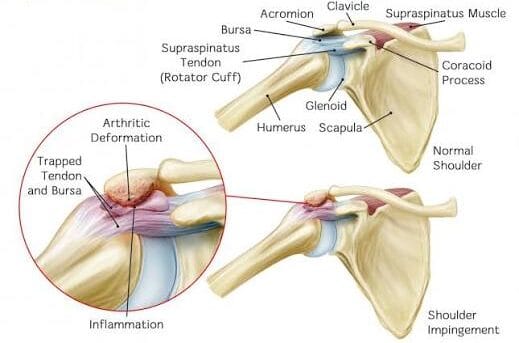
Sub-acromial impingement happens when the tendon of your supraspinatus muscle (part of your rotator cuff) or sub-acromial bursa (a fluid-filled cushion) become pinched under the acromion (the top of the shoulder blade that arches over the shoulder joint to connect with your collar bone). This irritation leads to pain, swelling, and reduced shoulder mobility, especially during activities that involve lifting or rotating the arm.
Causes of Sub-Acromial Impingement
Several factors can increase the risk of shoulder impingement, including:
- Posture – Rounded shoulders or a kyphotic posture can be a factor that limits shoulder range of motion and potentially reduces the sub-acromial space.
- Repetitive overhead activity – Sports like swimming, tennis, and weightlifting, or jobs like painting and construction can cause a repetitive strain on those tissues.
- Muscle weakness or imbalance – Other areas of the rotator cuff causing a muscular imbalance and affect how the shoulder complex moves.
- Bone spurs or structural changes – Age-related changes can further narrow the space.
What are the Symptoms?
If you have sub-acromial impingement, you may notice:
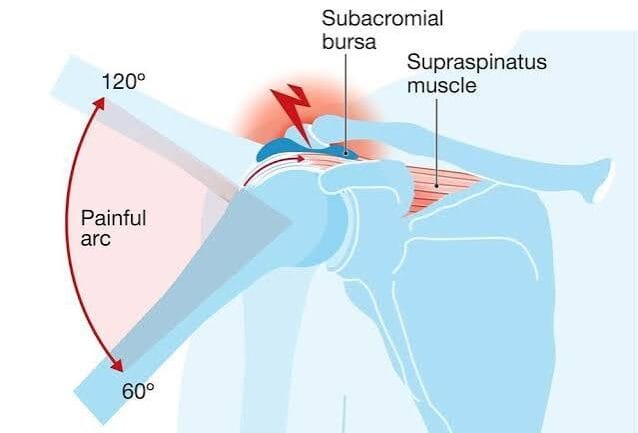
- Pain when raising your arm, especially between 60-120 degrees (the “painful arc”)
- Night pain when lying on the affected shoulder
- Shoulder weakness or clicking sensations
- Difficulty with everyday activities like dressing, reaching overhead, or fastening a seatbelt
How Can Osteopathy or Medical Acupuncture Help?
Osteopathy or Medical Acupuncture focuses on reducing pain, improving joint alignment and mechanics, reducing inflammation, and restoring natural movement through simple rehabilitation exercises.
Unlike treatments that only target the painful area, we’ll look at the whole body, including your spine, posture, and surrounding muscles to support the affected tissues and speed up recovery.
We might use a combination of different manual therapy techniques (listed below), we might administer some acupuncture, or we might use a combination of it all:
- Gentle joint mobilisation to improve shoulder mechanics and create more sub-acromial space
- Soft tissue massage to release tight muscles and reduce inflammation
- Exercise prescription to strengthen the rotator cuff and stabilising muscles
This holistic approach not only relieves pain but also addresses the root cause to prevent future flare-ups.
At Home Tips for Shoulder Pain Relief
Alongside your treatment, these steps can speed up recovery:
- Stay active, but avoid painful movements – Gentle mobility exercises help maintain range of motion.
- Strengthen your rotator cuff – Your osteopath can recommend safe, targeted exercises.
- Pain management – Short term use of ibuprofen (NSAIDs) and/or paracetamol can be useful to manage the pain and inflammation while the tissues begin to recover. You can also use ice and/or heat, which ever feels more effective.
When to See an Osteopath
If shoulder pain lasts more than 2–3 weeks, disrupts your sleep, or limits daily activities, it’s important to seek professional help. Early assessment and treatment can prevent more serious issues such as rotator cuff tears or chronic bursitis.
Book Your Shoulder Pain Treatment Today
Don’t let sub-acromial impingement or rotator cuff pain stop you from living your life.
One of the team can provide you with a personalised treatment plan to relieve shoulder pain and restore movement, without relying on strong medications or invasive procedures.
Call us on 01604 435484, or book online now to schedule your consultation.